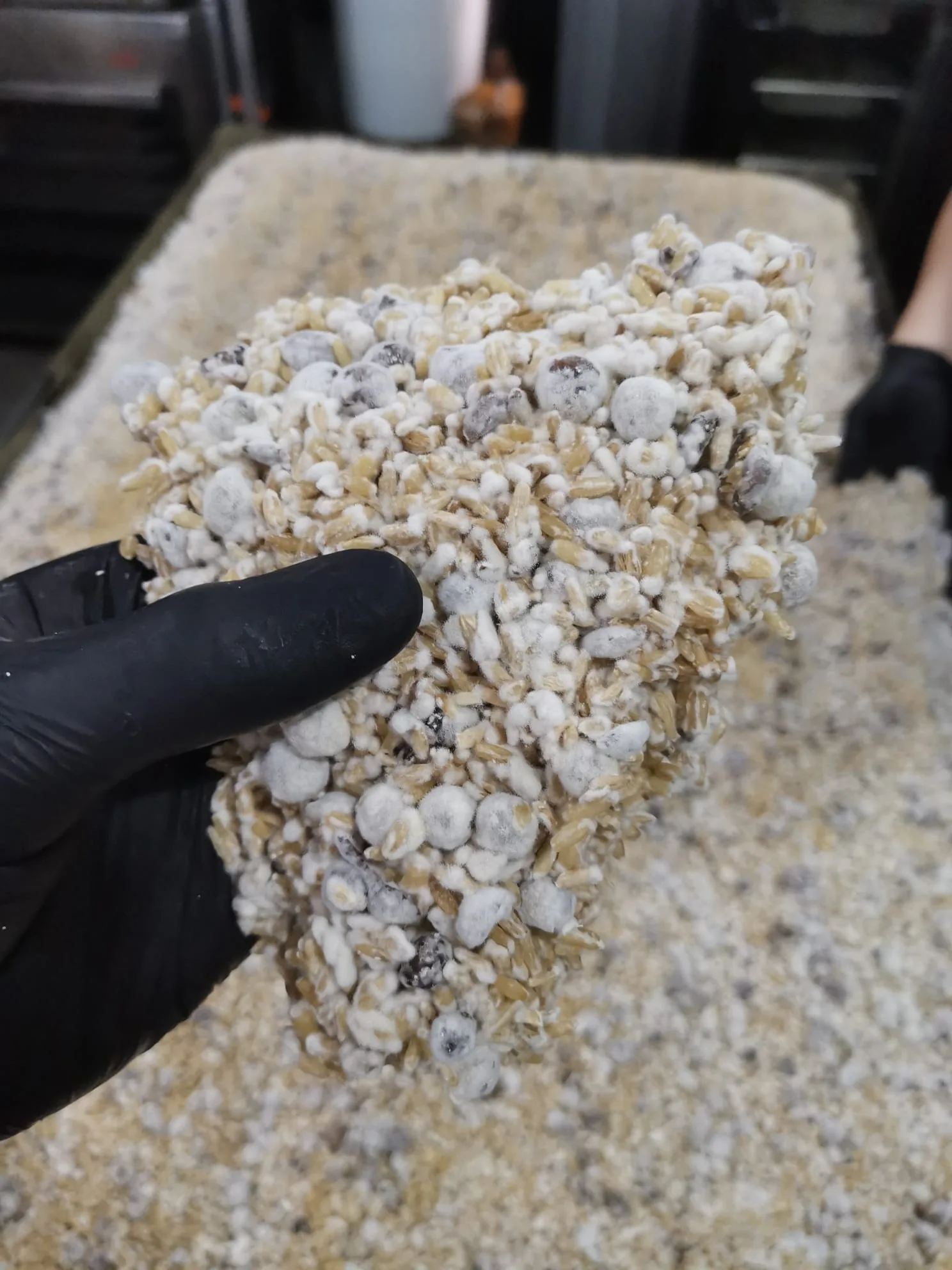
Koji is the Japanese name for the fungus Aspergillus oryzae - a microorganism that grows on grains and pulses, using them for energy and nutrition. As it grows, the fungus profoundly transforms the substrate it lives on: it increases the availability of amino acids, generates proteolytic and amylolytic enzymes, and produces B vitamins.
The result isn't merely a more nutritious food - it's a food with a complexity of flavour that is hard to reach any other way.
East Asian civilisation has used koji for more than three thousand years. It is the central agent in making sake, miso, shoyu, amazake and mirin - ferments that shape some of the world's most refined cuisines. At Kin, we apply that same ancestral knowledge with Portuguese ingredients and contemporary technical rigour.
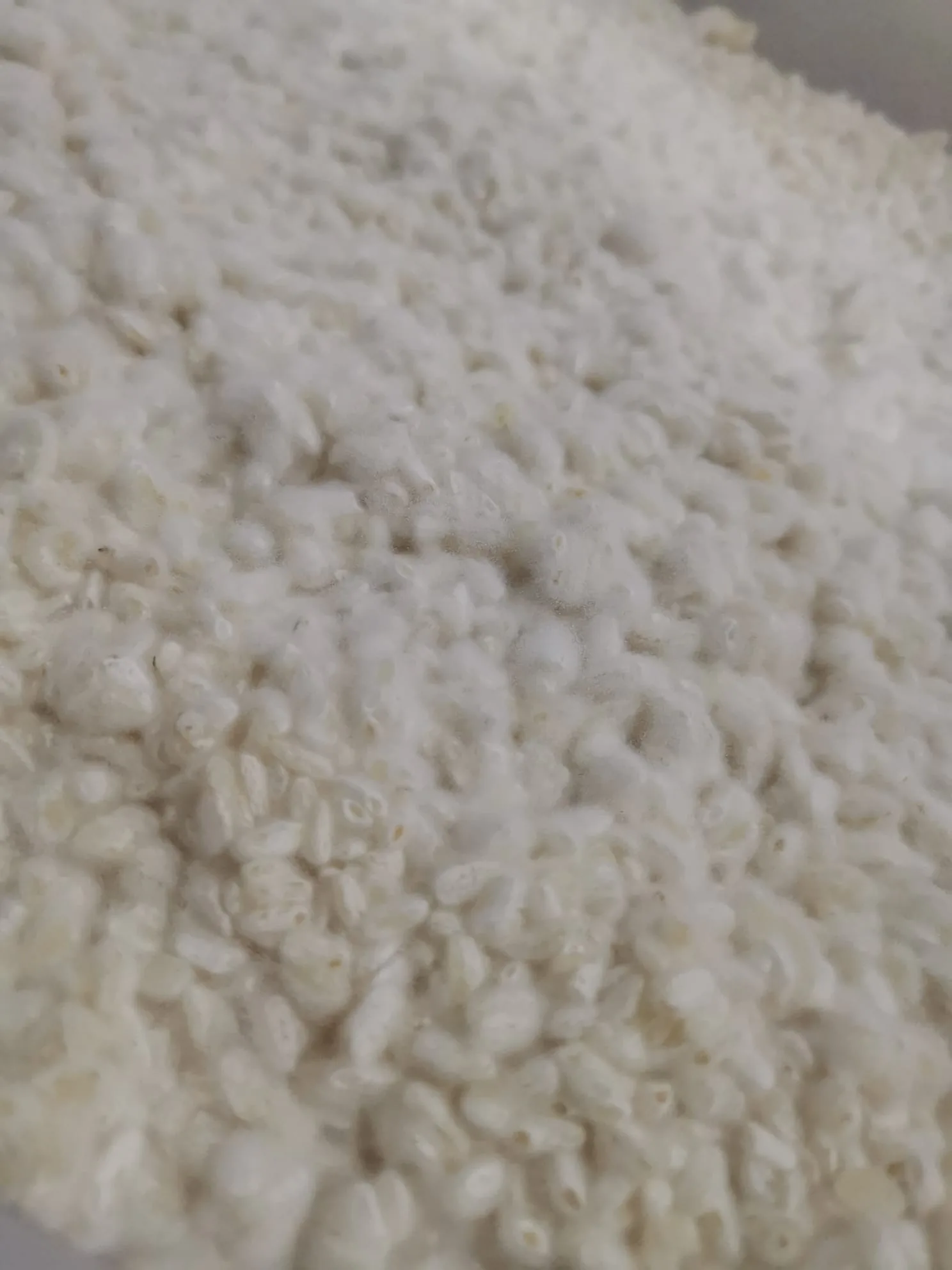
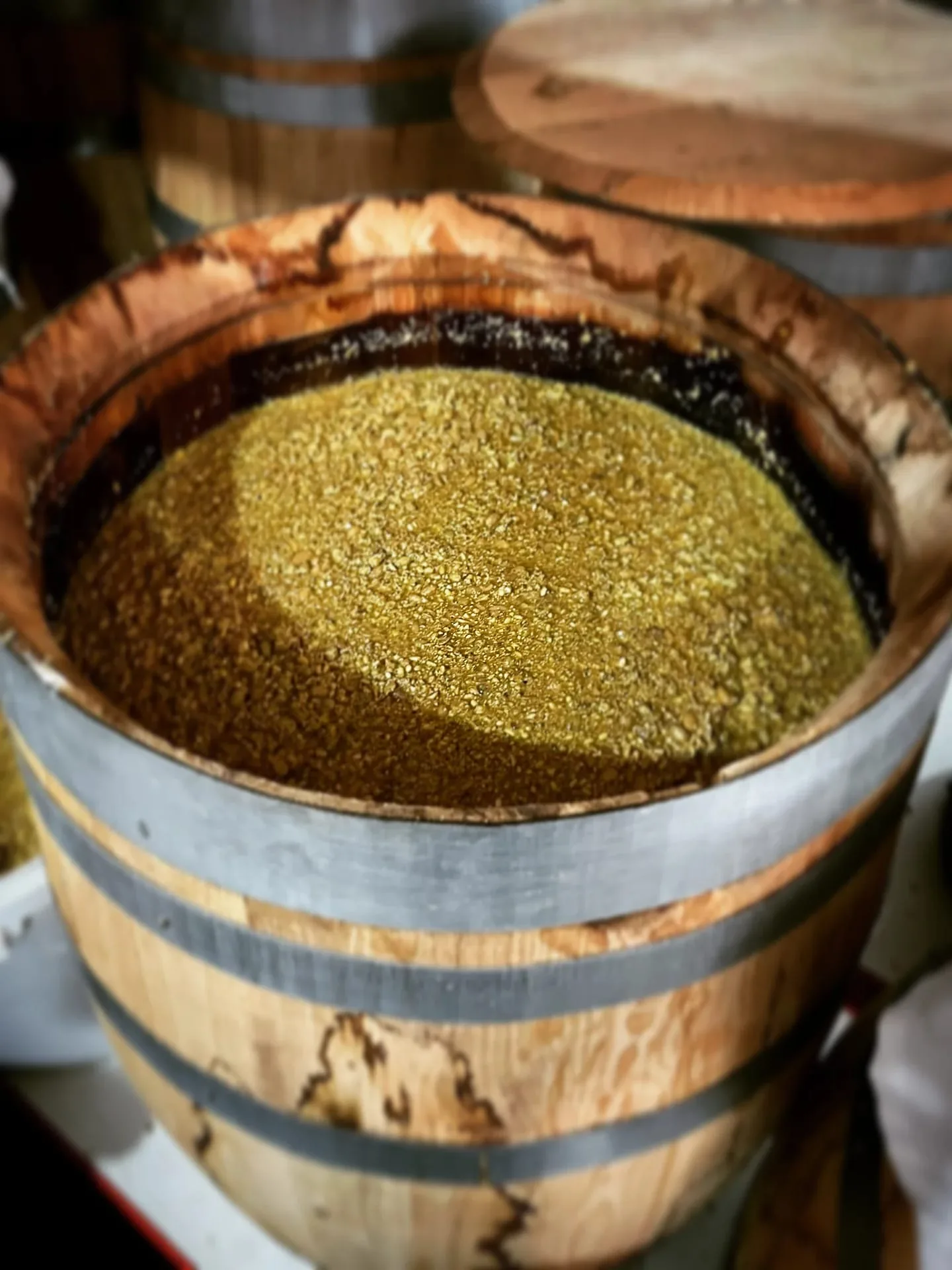
Koji isn't just a fungus - it's a biochemical factory. The enzymes it produces act on proteins, starches and fibres, turning simple ingredients into something of rare gustatory complexity.
At Kin, koji sits at the centre of everything we make. Every product starts from the same fungus but takes a different path - with its own ingredients, timings and techniques.
Rice koji mixed with sea salt and water - the most versatile seasoning in koji cookery. It cures fish and meat, tenderises proteins and multiplies the flavour of any marinade.
See it in the shop →A fermented carolino rice drink, naturally sweetened by koji's amylases, with no added sugar. Mild, creamy and nourishing.
See it in the shop →A paste of pulses or grains fermented with koji for months. Every Kin miso has a character of its own - from the barbela wheat bread miso to the soybean miso fermented for twelve months.
See it in the shop →An artisanal soy sauce made with wheat and soybean koji, fermented through slow salting. The result is a shoyu with depth, amber colour and clean umami.
See it in the shop →A sweet, aromatic seasoning fermented from rice and koji. True mirin balances sweetness, acidity and umami in a single ingredient - essential in Japanese cooking.
See it in the shop →Every Kin product undergoes rigorous microbiological analysis before packing. The koji we grow is monitored throughout the process - temperature, humidity, incubation time and enzymatic load. Only when the parameters sit within defined values does the product move to the next stage.
There are no shortcuts in koji. Quality is a consequence of the process, not a final inspection.
Every product is available in our online shop.